Walking the Greensand Way: A Journey Through Southern England’s Hidden Landscapes
The Greensand Way is a captivating 108-mile (174 km) long-distance trail that traverses the ancient greensand ridge running through Surrey and Kent. This geological feature, formed from sandstone laid down over 100 million years ago, creates a distinctive landscape of wooded hills, sandy heaths, and spring-fed valleys that contrasts beautifully with the chalk downs to the north and the clay weald to the south. Following this natural corridor from Haslemere in Surrey to Hamstreet in Kent, the trail reveals a surprisingly rural and tranquil corner of southeastern England, far removed from the urban sprawl of nearby London.
The Route and Character
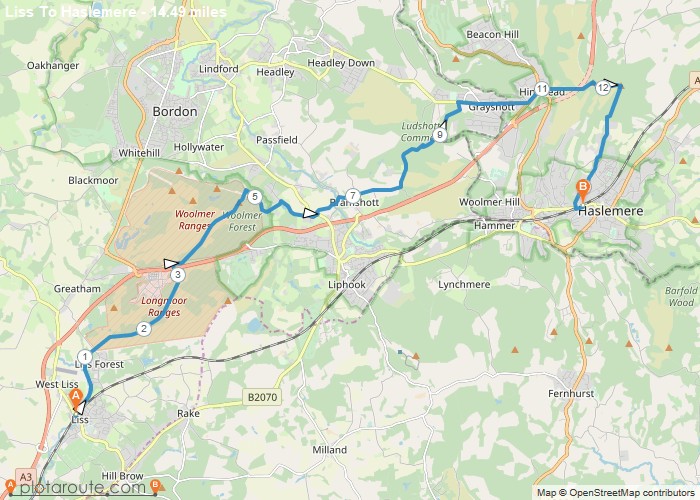
Beginning in the attractive market town of Haslemere on Surrey’s border with Hampshire and West Sussex, the Greensand Way follows the greensand ridge eastward through two counties, passing through the Surrey Hills Area of Outstanding Natural Beauty before entering the Garden of England—Kent’s historic landscape of orchards, hop gardens, and oast houses. The trail concludes at Hamstreet, southeast of Ashford, though many walkers extend to the coast at Hythe.
Most walkers complete the Greensand Way over five to seven days, covering 15-20 miles (24-32 km) daily. This pace allows time to explore the numerous historic sites, charming villages, and natural attractions along the route while still maintaining steady progress. The terrain is varied but generally moderate, with rolling hills rather than steep mountains, making this an accessible trail for walkers with reasonable fitness who appreciate diverse landscapes and rich history.
Trail Highlights and Landscapes
The Surrey Hills
The western section of the trail passes through the Surrey Hills AONB, a landscape of wooded hills, heathland commons, and picturesque villages that has inspired artists and writers for centuries. The greensand geology creates acidic, sandy soils that support distinctive vegetation—Scots pine, birch, heather, and gorse dominate the heaths, while ancient oak and beech woodlands cloak the hillsides.
Leith Hill – At 294 meters (965 feet), this is the highest point in southeastern England. The trail passes close to the summit, where an 18th-century tower (built by Richard Hull in 1765 to raise the hill above 1,000 feet) provides panoramic views extending to the South Downs, North Downs, and on exceptionally clear days, to the English Channel. The surrounding woodland, managed by the National Trust, includes magnificent rhododendron displays in late spring and extensive bluebell woods.
Hascombe Hill and Hydon’s Ball – These prominent greensand hills offer excellent viewpoints across the Weald. Hydon’s Ball, topped by a memorial seat to the Victorian hymn writer Octavia Hill, provides a peaceful spot to appreciate the rolling Surrey countryside.
Ancient Woodlands and Heathlands
The trail passes through numerous ancient woodlands—forests that have existed continuously since at least 1600 AD and often much longer. These woods are biodiversity hotspots, supporting specialized plant communities including bluebells, wood anemones, and rare orchids, along with ancient trees, fungi, and woodland birds.
The heathland sections, particularly around Hindhead and Thursley Common, represent increasingly rare lowland heath habitat. These open landscapes, maintained by grazing and management, support specialized wildlife including all six British reptile species (adder, grass snake, smooth snake, common lizard, sand lizard, and slow worm), Dartford warblers, nightjars, and rare invertebrates.
Historic Sites and Heritage
Abinger Hammer – This picturesque village features a unique clock that strikes the hours with a hammer wielded by a figure of Jack the Smith, commemorating the area’s iron-working heritage. The surrounding area was a center of iron production from Roman times through the medieval period.
Shere – Often described as Surrey’s prettiest village, Shere features in the Domesday Book and retains its medieval street plan. The village church contains a rare anchorite’s cell where Christine Carpenter was voluntarily walled up in 1329 to live a life of prayer. The village has appeared in numerous films and TV productions.
Chartwell – Winston Churchill’s beloved country home from 1922 until his death, now managed by the National Trust. The house remains much as Churchill left it, filled with his paintings, books, and personal possessions. The gardens, which Churchill personally designed and worked on, offer stunning views across the Weald.
Ightham Mote – One of England’s finest medieval manor houses, this moated 14th-century building has been continuously inhabited for nearly 700 years. The National Trust property showcases architecture from medieval to Victorian periods and sits in beautiful gardens and woodland.
Scotney Castle – A romantic 14th-century moated castle ruin set within one of England’s most celebrated picturesque gardens. The Victorian mansion overlooks the castle and gardens, with the estate offering woodland walks and seasonal displays.
The Weald Landscape
As the trail progresses eastward into Kent, the landscape transitions to the classic Weald—a gently rolling countryside of small fields, hedgerows, orchards, and hop gardens. This is the “Garden of England,” where fruit growing and hop cultivation have shaped the landscape for centuries.
Oast Houses – These distinctive conical buildings, once used for drying hops, are iconic features of the Kentish landscape. Many have been converted to homes, but they remain picturesque reminders of the region’s brewing heritage.
Orchards and Vineyards – The trail passes through areas of traditional orchards (apples, pears, cherries, and plums) and increasingly, modern vineyards. Kent’s climate and soils prove excellent for wine production, and several vineyards along or near the route offer tours and tastings.
Villages and Market Towns
Haslemere – The trail’s starting point, this attractive market town sits at the junction of three counties. The Haslemere Educational Museum, founded in 1888, offers fascinating local history and natural history collections.
Dorking – A historic market town beneath Box Hill, Dorking has been a settlement since Roman times. The town’s numerous antique shops, independent retailers, and traditional market make it worth exploring.
Sevenoaks – This prosperous market town takes its name from the seven oak trees that once stood on the Vine cricket ground. Knole House, one of England’s largest houses and a rare example of late-medieval architecture, sits in a 1,000-acre deer park on the town’s edge.
Pluckley – Reputedly England’s most haunted village (listed in the Guinness Book of Records), Pluckley featured as the setting for the TV series “The Darling Buds of May.” The village retains considerable charm with its traditional Kentish architecture.
Wildlife and Nature
The diverse habitats along the Greensand Way support exceptional wildlife:
Heathland Specialists: Dartford warblers, stonechats, nightjars (listen for their churring call on summer evenings), hobbies (small falcons that hunt dragonflies), and all six British reptile species.
Woodland Birds: Great spotted and green woodpeckers, nuthatches, treecreepers, tawny owls, sparrowhawks, and in summer, various warbler species including chiffchaffs, willow warblers, and blackcaps.
Mammals: Roe and fallow deer, foxes, badgers, and increasingly, wild boar (escaped from farms and now breeding in some woodlands). Dormice inhabit the hedgerows, though these nocturnal creatures are rarely seen.
Butterflies: The sandy soils and varied habitats support numerous species including silver-studded blues on the heaths, purple emperors in the oak woods, and white admirals along woodland rides.
Spring Wildflowers: Ancient woodlands carpet with bluebells in May, while primroses, wood anemones, and early purple orchids add color. The heaths bloom with heather in late summer, creating purple landscapes.
Planning Your Walk
The Greensand Way is generally well-waymarked with distinctive green and white markers, though some sections require careful navigation, particularly where the route crosses farmland or follows minor roads. The Surrey County Council and Kent County Council both publish guides, and OS Explorer maps 145, 146, 147, and 125 cover the route.
Accommodation is readily available in the towns and larger villages along the route, with options including B&Bs, country inns, small hotels, and some campsites. The trail’s proximity to London and good transport links mean accommodation can book up, particularly on weekends, so advance planning is advisable. Several companies offer baggage transfer services.
Terrain and Conditions: The paths vary from well-maintained woodland tracks to field edges, quiet lanes, and some road walking (mostly on quiet country roads). The greensand can be sandy and loose in places, while clay sections can become very muddy after rain. Good walking boots are essential. The trail includes numerous stiles and gates.
Transport: Both Haslemere and Hamstreet have railway stations with regular services to London, making the linear walk logistically straightforward. Numerous stations along or near the route (Gomshall, Dorking, Oxted, Sevenoaks, and others) allow the trail to be walked in sections or provide bail-out options.
Best Time to Walk: Late spring (May) offers spectacular bluebell displays in the woodlands; summer (June-August) provides long days, though some sections can be overgrown; early autumn (September-October) delivers beautiful colors, fungi displays, and generally drier paths; winter walking is feasible but expect muddy conditions.
Historical and Geological Context
The Greensand Way follows a geological feature—the Lower Greensand ridge—that has influenced human settlement and land use for millennia. The porous sandstone creates spring lines where water emerges, and these reliable water sources attracted early settlers. Iron ore in the greensand led to iron working from Roman times through the medieval period, with the industry fueled by charcoal from the extensive woodlands.
The landscape bears marks of every era: prehistoric hill forts, Roman roads and iron workings, medieval manor houses and churches, Tudor and Jacobean estates, Victorian railways and villas, and 20th-century conservation efforts that have preserved the heaths and woodlands.
Why Walk the Greensand Way?
The Greensand Way offers a surprising discovery: that within an hour of central London lies genuinely beautiful, peaceful countryside rich in wildlife, history, and natural beauty. This is a trail that challenges preconceptions about southeastern England, revealing landscapes and communities that remain authentically rural despite their proximity to the capital.
The variety is exceptional—ancient woodlands, open heaths, rolling farmland, historic estates, and charming villages create constantly changing scenery. The cultural richness, from medieval manor houses to Churchill’s Chartwell, adds intellectual interest to the physical journey.
For walkers seeking a well-facilitated long-distance trail with excellent transport links, varied landscapes, and rich history, the Greensand Way delivers a thoroughly satisfying experience. It’s particularly suitable for those building up to more challenging trails, walkers who appreciate accessible countryside without remote mountain sections, or anyone wanting to explore the surprising beauty of the southeastern counties.
The Greensand Way proves that great walking doesn’t require wilderness—sometimes the most rewarding trails are those that reveal the beauty hidden in plain sight, close to where millions live but known to relatively few. It’s a trail that invites you to slow down, observe closely, and appreciate the layers of history, geology, and ecology that make the English countryside so endlessly fascinating.